
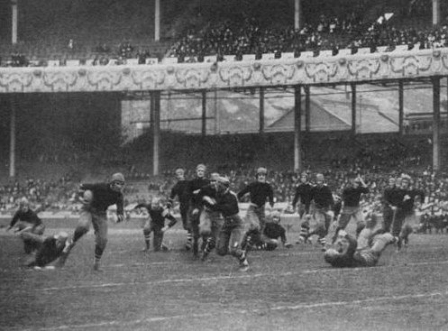
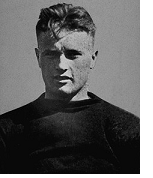
 Cornell had long
been fielding strong football teams, but they had never come reasonably
close to a national championship season before. They were generally a
#11-20 type team, but fielded top 10 caliber teams in 1901 and for 3 straight
years 1906-1908. 1909-1913 they were mediocre, going 23-20-3, and were
top 25 caliber just twice. In 1914, they went 8-2, and would have
ranked about #15. 1915 was their first season going unbeaten and untied
(9-0), and the first time they ever beat Harvard.
Cornell had long
been fielding strong football teams, but they had never come reasonably
close to a national championship season before. They were generally a
#11-20 type team, but fielded top 10 caliber teams in 1901 and for 3 straight
years 1906-1908. 1909-1913 they were mediocre, going 23-20-3, and were
top 25 caliber just twice. In 1914, they went 8-2, and would have
ranked about #15. 1915 was their first season going unbeaten and untied
(9-0), and the first time they ever beat Harvard.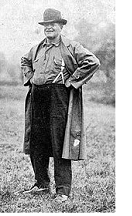 Pittsburgh had
long been working their way up the college football ladder, going
78-25-3 1904-1914, and posting perfect records in 1904 and 1910.
They had been a strong 8-1 team in 1914, and Pop Warner's arrival as
coach in 1915 put them over the top. They would not lose again until
the finale of the 1918 season, 32 straight wins, and they are credited
with as many as 3 national championships during that time. Pop Warner (pictured at left)
was a Cornell grad who had also coached there for 5 seasons. Prior to
1915, he had been the coach at Carlisle, winning what I consider to be
an MNC in 1911, but he did even better at
Pitt, going 60-12-4 1915-1923. After that he moved on to Stanford,
where he is credited with another MNC in 1926, and after a stint at Temple he
finished his career at 319-106-32, setting a record for major football coaching wins that stood for more than 40 years
Pittsburgh had
long been working their way up the college football ladder, going
78-25-3 1904-1914, and posting perfect records in 1904 and 1910.
They had been a strong 8-1 team in 1914, and Pop Warner's arrival as
coach in 1915 put them over the top. They would not lose again until
the finale of the 1918 season, 32 straight wins, and they are credited
with as many as 3 national championships during that time. Pop Warner (pictured at left)
was a Cornell grad who had also coached there for 5 seasons. Prior to
1915, he had been the coach at Carlisle, winning what I consider to be
an MNC in 1911, but he did even better at
Pitt, going 60-12-4 1915-1923. After that he moved on to Stanford,
where he is credited with another MNC in 1926, and after a stint at Temple he
finished his career at 319-106-32, setting a record for major football coaching wins that stood for more than 40 years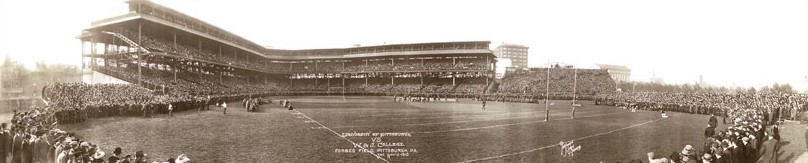
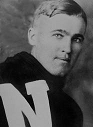 Nebraska
had not lost since 1912, and their 8-0 finish in 1915 continued an
unbeaten streak that lasted for 34 games. I covered their coach, Jumbo
Stiehm, in my
Nebraska
had not lost since 1912, and their 8-0 finish in 1915 continued an
unbeaten streak that lasted for 34 games. I covered their coach, Jumbo
Stiehm, in my 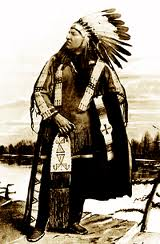
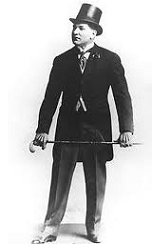
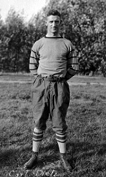 Washington
State had 4 straight Native American head coaches 1912-1925, starting
with Nebraska grad John "Chief" Bender, followed by 3 former players
for Carlisle Indian School
Washington
State had 4 straight Native American head coaches 1912-1925, starting
with Nebraska grad John "Chief" Bender, followed by 3 former players
for Carlisle Indian School
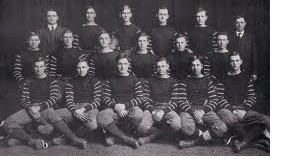 Oklahoma's coach
was Hall of Famer Bennie Owen, a Kansas grad who had played for
Fielding Yost in 1899. Owen coached at Washburn (Kansas) in 1900 and at
Bethany (Kansas) 1901-1904, defeating Oklahoma in 1903 and 1904.
Oklahoma hired him away, and he went 122-54-16 there 1905-1926, winning 2 conference titles in the SWC and 1 in the MVC.
However, he only went 59-48-11 against major schools
Oklahoma's coach
was Hall of Famer Bennie Owen, a Kansas grad who had played for
Fielding Yost in 1899. Owen coached at Washburn (Kansas) in 1900 and at
Bethany (Kansas) 1901-1904, defeating Oklahoma in 1903 and 1904.
Oklahoma hired him away, and he went 122-54-16 there 1905-1926, winning 2 conference titles in the SWC and 1 in the MVC.
However, he only went 59-48-11 against major schools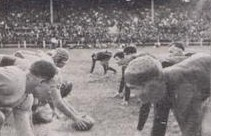 This was the first year Oklahoma played Texas at the Texas State
Fair (pictured), and a state-record 11,000 fans filled the covered grandstands.
Texas was favored, and they came into the game 11-5-1 in the
series. The teams combined for 71 passes. Oklahoma's Spot Geyer fumbled
the opening kickoff, and Texas recovered at the 25, setting up a
touchdown for an early 7-0 lead. Texas later fumbled at the Oklahoma
22, then blocked a punt to get the ball at the Oklahoma 10, but missed
a field goal. Oklahoma finally got on track late in the first quarter,
driving 80 yards, mostly through the air, for the tying touchdown. The
drive opened with a 25 yard pass, then featured a big 10 yard run on
4th and 2, a 20 yard pass, and a touchdown pass on 3rd and goal from
the 9. In the second quarter, Geyer missed 2 field goals, one from only
12 yards out, and Texas fumbled at the Oklahoma 12, leaving the teams
tied at the half.
This was the first year Oklahoma played Texas at the Texas State
Fair (pictured), and a state-record 11,000 fans filled the covered grandstands.
Texas was favored, and they came into the game 11-5-1 in the
series. The teams combined for 71 passes. Oklahoma's Spot Geyer fumbled
the opening kickoff, and Texas recovered at the 25, setting up a
touchdown for an early 7-0 lead. Texas later fumbled at the Oklahoma
22, then blocked a punt to get the ball at the Oklahoma 10, but missed
a field goal. Oklahoma finally got on track late in the first quarter,
driving 80 yards, mostly through the air, for the tying touchdown. The
drive opened with a 25 yard pass, then featured a big 10 yard run on
4th and 2, a 20 yard pass, and a touchdown pass on 3rd and goal from
the 9. In the second quarter, Geyer missed 2 field goals, one from only
12 yards out, and Texas fumbled at the Oklahoma 12, leaving the teams
tied at the half. Colorado State
head coach and athletic director Harry Hughes was an Oklahoma grad who
had played for Bennie Owen, then served as assistant coach at Oklahoma
in 1910. He had his work cut out for him when he arrived at CSU in
1911, as they had posted 7 losing seasons in a row, going 6-24-5 in
that time, and worse, only 2 members of the team were actually CSU
students. He dismissed all the ringers, and appealed to the students to
try out for the team, barely finding enough players to play that
season, and they finished 1-6. After that first school year, he and his
team cleared the playing field of rocks, graded it, planted grass, and
put up grandstands.
Colorado State
head coach and athletic director Harry Hughes was an Oklahoma grad who
had played for Bennie Owen, then served as assistant coach at Oklahoma
in 1910. He had his work cut out for him when he arrived at CSU in
1911, as they had posted 7 losing seasons in a row, going 6-24-5 in
that time, and worse, only 2 members of the team were actually CSU
students. He dismissed all the ringers, and appealed to the students to
try out for the team, barely finding enough players to play that
season, and they finished 1-6. After that first school year, he and his
team cleared the playing field of rocks, graded it, planted grass, and
put up grandstands.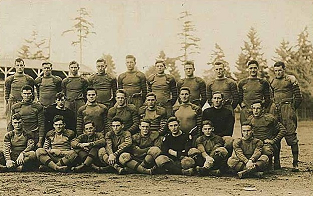 This was 7-0 Washington's 8th of 9 straight unbeaten seasons. I discussed them briefly in my articles for the 1910 and 1913
mythical national championships, and I covered their Hall of Fame
coach, Gil Dobie, in the 1910 piece. By 1915, Gil Dobie had become the
most hated figure in Northwestern football, outside Seattle of course, and not just because he
never lost a game at Washington (though let's face it-- that was most of it). Like Pop Warner at Pittsburgh and
Harry Hughes at Colorado State, Dobie was a chronic poormouther,
constantly deriding his own team and predicting that they would lose
every week, regardless of the opponent. This might have seemed amusing
for the first few years Dobie coached Washington, but the longer his
winning streak grew, the more his poormouthing grated, until opposing
coaches despised his act.
This was 7-0 Washington's 8th of 9 straight unbeaten seasons. I discussed them briefly in my articles for the 1910 and 1913
mythical national championships, and I covered their Hall of Fame
coach, Gil Dobie, in the 1910 piece. By 1915, Gil Dobie had become the
most hated figure in Northwestern football, outside Seattle of course, and not just because he
never lost a game at Washington (though let's face it-- that was most of it). Like Pop Warner at Pittsburgh and
Harry Hughes at Colorado State, Dobie was a chronic poormouther,
constantly deriding his own team and predicting that they would lose
every week, regardless of the opponent. This might have seemed amusing
for the first few years Dobie coached Washington, but the longer his
winning streak grew, the more his poormouthing grated, until opposing
coaches despised his act.